Carbon Steel vs. Stainless Steel: The Complete Industrial Guide​

Carbon Steel vs. Stainless Steel

Executive Summary​ - Carbon Steel vs. Stainless Steel

Carbon Steel vs. Stainless Steel: Carbon steel and stainless steel dominate industrial applications – but choosing incorrectly risks ​​project failure​​, ​​safety hazards​​, and ​​cost overruns​​. Key decision factors:

  1. ​Corrosion Environment​​ (chlorides, acids, humidity)
  2. ​Mechanical Demands​​ (strength, toughness, fatigue)
  3. ​Total Ownership Cost​​ (material + fabrication + maintenance)
  4. ​Regulatory Compliance​​ (ASME, FDA, NACE)

1. Foundational Definitions: What Sets These Alloys Apart?​

1.1 What is Carbon Steel?​

Carbon steel is an ​​iron-carbon alloy​​ containing 0.05–2.1% carbon by weight, with ​​no minimum chromium requirement​​. Its properties are primarily determined by carbon content:

  • ​Low-Carbon Steel​​ (<0.3% C): High ductility, weldability (e.g., ASTM A36 structural beams)
  • ​Medium-Carbon Steel​​ (0.3–0.6% C): Balanced strength/toughness (e.g., AISI 1045 shafts)
  • ​High-Carbon Steel​​ (>0.6% C): Extreme hardness, wear resistance (e.g., AISI 1095 springs)

As a leading ​​carbon steel manufacturer​​, Huaxiao-Alloy produces over 200 grades meeting ASTM, EN, JIS, and GB standards.

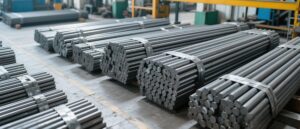
carbon steel bar supplier

Carbon Steel Bar

ISO-certified supplier of 100+ carbon steel bars. Round/flat/hex bars up to 300mm. Cutting, machining, coating. FOB/CIF global delivery.
Get Quote»
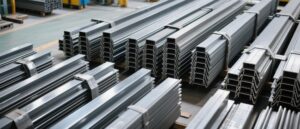
carbon steel beam supplier

Carbon Steel Beam

ISO-certified supplier of carbon steel beams (IPN/IPE, HEB/HEA). 80+ grades, cutting/punching services. FOB/CIF global delivery in 15-25 days.
Get Quote»
carbon steel wire supplier

Carbon Steel Wire

ISO-certified carbon steel wire supplier. 0.1-20mm diameters, 100+ grades, tensile 400-2,500 MPa. Bulk pricing & specs. Request quote!
Get Quote»
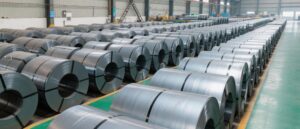
carbon steel plate sheet

Carbon Steel Plate / Sheet

Huaxiao-Alloy: Leading ​​carbon steel plate/sheet supplier & manufacturer​​. ASTM, AISI, DIN grades, global certifications, and custom solutions. Request a quote today!
Get Quote»

1.2 What is Stainless Steel?​

Stainless steel is defined by its ​​minimum 10.5% chromium content​​, forming a self-repairing passive oxide layer that resists corrosion. Key categories include:

  • ​Austenitic (300 Series)​​: Non-magnetic, superior corrosion resistance (e.g., 304/316)
  • ​Ferritic (400 Series)​​: Magnetic, moderate corrosion resistance (e.g., 430)
  • ​Martensitic (400/500 Series)​​: Heat-treatable, high strength (e.g., 410/440C)
  • ​Duplex (2205/2507)​​: Mixed austenitic-ferritic structure for extreme environments

Huaxiao-Alloy supplies ​​premium stainless steel grades​​ with up to 20% chromium for critical applications.

904L-stainless-steel-supplier

904L Stainless Steel

Huaxiao-Alloy: Premium 904L stainless steel manufacturer offering sheets, tubes, bars, and custom solutions. Explore specs, applications, and FAQs.
Get Quote»
316L-stainless-steel-supplier

316L Stainless Steel

Huaxiao-Alloy: Premium 316L stainless steel manufacturer offering sheets, tubes, bars, and custom fabrication. Explore specs, applications, and FAQs.
Get Quote»
316-stainless-steel-supplier

316 Stainless Steel

Huaxiao-Alloy: Premium 316 stainless steel manufacturer offering sheets, tubes, bars, and custom fabrication. Explore specs, applications, and FAQs.
Get Quote»
201-stainless-steel-supplier

201 Stainless Steel

Huaxiao-Alloy: Trusted 201 stainless steel manufacturer offering sheets, coils, bars, and custom fabrication. Explore specs, applications, and FAQs.
Get Quote»
202-stainless-steel-supplier

202 Stainless Steel

Huaxiao-Alloy: Trusted 202 stainless steel manufacturer offering sheets, coils, bars, and custom solutions. Explore specs, applications, and FAQs.

Get Quote»

2. Fundamental Composition Differences​ - Carbon Steel vs. Stainless Steel

Element​​Carbon Steel (%)​​Stainless Steel (%)​​Functional Impact​
​Iron (Fe)​98-99.550-85Base structural matrix
​Carbon (C)​0.05-2.0≤1.2Hardness & tensile strength
​Chromium (Cr)​<0.310.5-30Corrosion resistance
​Nickel (Ni)​0-15Ductility & cryogenic performance
​Molybdenum (Mo)​<0.10-7Pitting resistance
​Manganese (Mn)​0.3-1.65≤2.0Deoxidation agent

Data per ASTM A36 (carbon) / ASTM A240 (stainless) standards

​Manufacturer Insight:​​ At Huaxiao-Alloy, we precisely control composition ranges (±0.03%) to meet specific application requirements across both steel families.

3. Mechanical Properties Comparison​​ - Carbon Steel vs. Stainless Steel

(Tested per ASTM E8/E18 at 20°C)

​Property​​AISI 1045 Carbon Steel​​304 Stainless Steel​​416 Stainless Steel​
​Yield Strength (MPa)​450 ±20215 ±15275 ±20
​Tensile Strength (MPa)​750 ±30505 ±25485 ±30
​Elongation (%)​15 ±255 ±528 ±3
​Hardness (HB)​201150217
​Impact Energy (J)​4611254
​Fatigue Limit (MPa)​335250310

​Supplier Advantage:​​ Huaxiao-Alloy offers ​​ultra-high-strength variants​​ like 1095 carbon steel (YS: 990 MPa) and 17-4PH stainless (YS: 1,100 MPa) for extreme service conditions.

4. Corrosion Resistance Analysis​ - Carbon Steel vs. Stainless Steel​

Salt Spray Testing Results (ASTM B117)
​Environment​​A36 Carbon Steel​​316L Stainless​​Superior Solution​
​Urban Atmosphere​2 years70+ yearsStainless (Passivation layer)
​3% NaCl Solution​72 hours1,000+ hoursStainless (Mo content)
​Acidic Conditions (pH3)​24 hours480 hoursAlloy 20 stainless
​Galvanic Corrosion​Severely affectedCathodic protectionInsulated connections

​Manufacturer Testing Note:​​ Huaxiao-Alloy certifies pitting resistance equivalent (PRE) values:

​PRE = %Cr + 3.3×%Mo + 16×%N​
304 SS: PRE = 19.0 | 316L SS: PRE = 26.5 | 254 SMO: PRE = 43.5

Carbon steel relies on ​​external barriers​​ (galvanization, paint) for protection. Stainless steel utilizes ​​electrochemical passivation​​:

Corrosion Resistance Index = %Cr + 3.3×%Mo + 30×%N

Example:

  • ​Carbon Steel A36​​: CRI = 0
  • ​316L Stainless​​: CRI = 26.5
  • ​254 SMO​​: CRI = 43.5

​Supplier Solution:​​ Huaxiao-Alloy offers ​metal clad materials​ (carbon steel core + stainless layer) for cost-sensitive corrosive environments.

5. Thermal Properties Contrast​​ - Carbon Steel vs. Stainless Steel

​Parameter​​Medium C Steel​​Austenitic 304​​Application Impact​
​Max Service Temp (°C)​425870Furnace components
​Thermal Conductivity (W/m·K)​4615Heat exchangers
​CTE (10⁻⁶/K)​11.817.3Welding distortion
​Embrittlement Risk​250-400°C (blue brittleness)450-870°C (sensitization)Critical thermal cycling

​Engineering Solution:​​ Huaxiao-Alloy provides stabilized 321 stainless (Ti added) for 425-815°C service where carbon steel would fail.

6. Machinability & Fabrication (Industrial Perspective)​​ - Carbon Steel vs. Stainless Steel

Process​​Carbon Steel (SAE 1117)​​Stainless (303)​​Best Machined Alloy​
​Machining Speed (SFM)​150-25060-100Free-cutting steel
​Tool Wear Index​1.03.5Leaded steel
​Weldability (CEN)​CEN=0.38 (good)CEN=1.75 (poor)*GMAW-optimized grades
​Formability (r-value)​1.10.95Drawing-quality steel

Note: CEN = C + 0.15×Al + 0.04×Cr + 0.13×Mo + Ni/14
​Supplier Capability:​​ Huaxiao-Alloy supplies ​​laser-cut/pre-machined blanks​​ to bypass fabrication challenges with hardened alloys.

7. Industry-Specific Alloy Selection Guidelines​​ - Carbon Steel vs. Stainless Steel

​Sector​​Preferred Material​​Huaxiao-Alloy Solution​​Critical Factor​
​Oil & Gas​5Cr-0.5Mo carbon steel316L Clad pipesSulfide stress cracking
​Architecture​Corten weathering steel2205 duplex stainlessStructural integrity
​Food Processing​440 stainless steelElectropolished 316Bacterial resistance
​Automotive​HSLA 340 carbon steel301LN stainless springsStrength-to-weight
​Chemical​Glass-lined carbon steelHastelloy C-22HCl resistance

7.1 When to Choose Carbon Steel​

  • ​Structural Framing​​ (Yield strength ≤345 MPa)
  • ​Mass Production Components​​ (Cost savings >60% vs stainless)
  • ​High-Thermal-Conductivity Systems​​ (46 W/m·K vs 15 W/m·K)

Top Huaxiao-Alloy Recommendations:

  • ASTM A572 Gr. 50 for bridges
  • EN 10025 S355JR for construction
  • JIS G4051 S45C for automotive parts

​7.2 When to Choose Stainless Steel​

  • ​Chemical Processing​​ (Resists pitting up to pH 2.5)
  • ​Medical Equipment​​ (Passivates to <0.5µm Ra smoothness)
  • ​Marine Environments​​ (Survives 1,000+ salt spray hours)

Premium Huaxiao-Alloy Solutions:

  • 2205 Duplex for offshore platforms
  • 316L for pharmaceutical tanks
  • 17-4PH for aerospace fasteners

Why Choose Huaxiao Alloy?

Global Supply Chain:​

  • ​Lead Times​​: 15 days (carbon) / 25 days (stainless)
  • ​Certifications​​: PED 2014/68/EU · ASME II · NORSOK M650
  • ​Samples​​: Free metallographic analysis for qualifying projects

→ ​​Request Expert Consultation:​[email protected]

A: Yes – but only in extreme conditions. 304SS withstands <100ppm chlorides; 316SS handles <500ppm. For seawater, Huaxiao-Alloy specifies super duplex 2507.

A: Only with FDA-approved epoxy coatings. We recommend 316L stainless (no coating) for direct food contact per NSF/51.

A: Carbon steel: Higher tensile strength (AISI 1095: 965 MPa). Stainless steel: Higher toughness (17-4PH: 1,380 MPa yield after aging).

Carbon steels (CE <0.40) weld easier. Stainless requires ​​controlled heat input​​—our ​​L-Tek™ 308LSi filler metal​​ reduces hot cracking by 90%.

A: Carbon steel: Ferromagnetic • Austenitic stainless: Non-magnetic (work-hardened regions may attract magnets) • Ferritic/Martensitic: Magnetic.

A: Critical thresholds: Chloride >50ppm • pH<4.5 • H₂S >30ppm • Temp >205°C in oxidizing environments. Huaxiao-Alloy provides material selection software.

Carbon Steel vs. Stainless Steel

Call Us Now!!!

7*24 Customer Service

Tel:

+86 21-57425826

+86 13012867759

Whatsapp:

+1 (579) 300-2733

Address

557RM, 3#LOU 1388#, JIANG YUE ROAD, Minhang District, Shanghai,  201114, SHANGHAI,  China

GET AN ENQUIRY NOW!!!