Inconel 601 vs 602 – What’s the Difference?

Inconel_601_vs_602

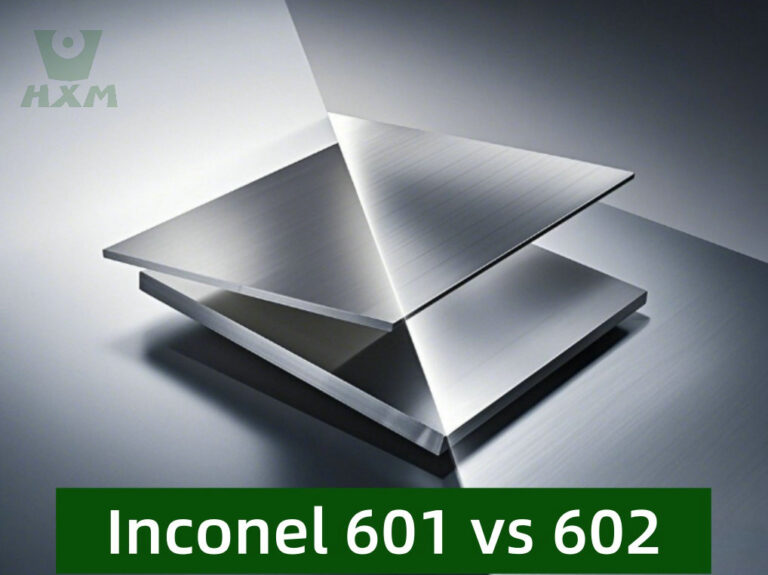
Many of our customers have such a question: Inconel 601 vs 602 – what’s the difference? Today, I will delve into the specifics of two popular alloys from the Inconel family: Inconel 601 and Inconel 602. Understanding the differences between these alloys is crucial for selecting the right material for a given application.

Inconel 601 vs 602 – 1. Analysis of Composition

At the heart of the distinction between Inconel 601 and 602 lies their chemical composition. Both alloys are primarily nickel-based, but their secondary elements and concentrations vary significantly. Inconel 601 is composed primarily of nickel, chromium, and aluminum, with aluminum playing a key role in enhancing oxidation resistance. This composition makes Inconel 601 highly resistant to oxidation and corrosion in high-temperature environments.

On the other hand, Inconel 602 has a similar nickel-chromium base but incorporates titanium and aluminum in its composition. Titanium adds further corrosion resistance, especially against sulfidation, while aluminum maintains the alloy’s oxidation resistance. This blend of elements gives Inconel 602 excellent resistance to both oxidizing and reducing atmospheres.

inconel_706_sheet_plate

Inconel 706 Sheet / Plate / Coil

Huaxiao-Alloy, a trusted Inconel 706 sheet manufacturer, delivers ASTM/ASME-certified sheets, plates, and coils with unmatched high-temperature strength and weldability for aerospace, power generation, and oil & gas industries.
Get Quote»
inconel_718_sheet_plate

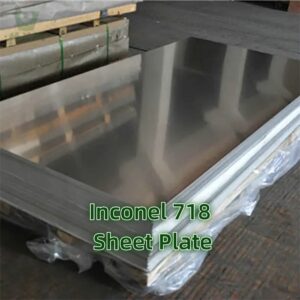
Inconel 718 Sheet / Plate / Coil

Huaxiao-Alloy, a trusted Inconel 718 sheet manufacturer, delivers ASTM/ASME-certified sheets, plates, and coils with unmatched high-temperature strength and corrosion resistance for aerospace, oil & gas, and energy industries.
Get Quote»

Inconel 601 vs 602 – 2. Mechanical Properties

When it comes to mechanical properties, both Inconel 601 and 602 exhibit high strength and ductility. However, there are subtle differences. Inconel 601 typically demonstrates slightly higher tensile strength and yield strength compared to Inconel 602. This makes it a preferred choice for applications that require maximum structural integrity.

On the contrary, Inconel 602 offers superior creep resistance, which is crucial in maintaining material integrity under prolonged exposure to high temperatures. This property is especially important in applications such as heat-treating equipment and furnace components.

Inconel 686 alloy supplier

Inconel 686

Huaxiao-Alloy supplies Inconel 686, a nickel chromium molybdenum tungsten alloy with outstanding resistance to pitting, crevice corrosion, and stress corrosion cracking. Available in sheets, plates, pipes, and custom components. Contact us today.
Get Quote»
Inconel 693 alloy supplier

Inconel 693

Huaxiao-Alloy supplies Inconel 693, a nickel chromium alloy with outstanding oxidation, carburization, and metal dusting resistance. Available in sheets, plates, bars, and custom parts. Contact us today.

Get Quote»

Inconel 601 vs 602 – 3. Corrosion Resistance

Both alloys excel in corrosion resistance, but their specific performance depends on the type of corrosion encountered. Inconel 601 excels in oxidizing environments, where it can withstand extreme temperatures and oxidizing agents. Its aluminum content plays a vital role in this resistance, forming a protective oxide layer that shields the underlying material.

Inconel 602, on the other hand, demonstrates excellent resistance to sulfidation and other forms of corrosion in reducing atmospheres. The combination of titanium and aluminum in its composition enables it to form stable, protective scales that prevent corrosive attack.

Inconel 601 vs 602 – 4. Applications and Uses

Given these differences, Inconel 601 and 602 find their niche in specific applications. Inconel 601 is often used in high-temperature furnace components, heat-treating equipment, and other industrial applications where oxidation resistance is paramount. Its ability to maintain structural integrity even at extreme temperatures makes it a reliable choice for these demanding environments.

On the other hand, Inconel 602 is preferred in applications where both oxidation and sulfidation resistance are required. This alloy is commonly found in petrochemical processing equipment, exhaust systems, and other areas where exposure to reducing atmospheres and sulfur compounds is prevalent.

Conclusion

In summary, Inconel 601 and 602 are both exceptional alloys with unique properties and applications. Inconel 601 excels in oxidation resistance and tensile strength, making it suitable for high-temperature applications. In contrast, Inconel 602 offers superior creep resistance and resistance to sulfidation, making it ideal for reducing environments. 

Thank you for reading our article and we hope it can help you to have a better understanding of the differences between Inconel 601 vs 602. If you are looking for Inconel 601 & Inconel 602 Alloy suppliers online now, we would advise you to visit Huaxiao Alloy for more information.

As a leading supplier of Inconel Alloys from Shanghai China, Huaxiao Alloy offers customers high-quality Inconel 601 Alloy, Inconel 602 Alloy, Inconel 182 Alloy, Inconel 625 AlloyInconel 82 Filler Wire, and Inconel X750 at a very competitive price.

inconel_706_sheet_plate

Inconel 706 Sheet / Plate / Coil

Huaxiao-Alloy, a trusted Inconel 706 sheet manufacturer, delivers ASTM/ASME-certified sheets, plates, and coils with unmatched high-temperature strength and weldability for aerospace, power generation, and oil & gas industries.

Get Quote»
inconel_718_sheet_plate

Inconel 718 Sheet / Plate / Coil

Huaxiao-Alloy, a trusted Inconel 718 sheet manufacturer, delivers ASTM/ASME-certified sheets, plates, and coils with unmatched high-temperature strength and corrosion resistance for aerospace, oil & gas, and energy industries.
Get Quote»

Composition:

  • Inconel 600: Nickel (≥72%), Chromium (14-17%), Iron (6-10%), with trace carbon and manganese. Contains ​no aluminum.
  • Inconel 601: Nickel (58-63%), Chromium (21-25%), Iron (balance), plus ​aluminum (1.0-1.7%) for enhanced oxidation resistance.

Key Differences:

  • Oxidation Resistance: Inconel 601’s aluminum content forms a stable α-Al₂O₃ layer, enabling superior performance in temperatures up to ​1250°C (2282°F), compared to 600’s limit of ​1150°C (2102°F).
  • Mechanical Strength: 601 retains higher strength at elevated temperatures due to solid-solution strengthening from aluminum.
  • Applications: Inconel 600 is used in mildly corrosive environments (e.g., chemical processing), while 601 excels in extreme oxidative conditions (e.g., furnace components).

Inconel 601 is engineered for ​high-temperature oxidative and corrosive environments:

  • Thermal Processing: Radiant tubes, muffles, and heat-treating fixtures in industrial furnaces.
  • Aerospace: Combustion chamber liners, exhaust systems.
  • Chemical/Petrochemical: Catalytic reforming components, reactor internals.
  • Nuclear: Heat exchangers and waste incineration systems.
  • Energy: Gas turbine combustion cans and transition ducts.

Its ​aluminum-enhanced oxide layer ensures long-term stability in cyclic heating/cooling conditions.

Composition:

  • Inconel 601: Ni-Cr-Fe-Al alloy (as above).
  • Inconel 617: Nickel (44-55%), Chromium (20-24%), Cobalt (10-15%), Molybdenum (8-10%), Aluminum (0.8-1.5%).

Key Differences:

  • Temperature Capability:
    • 601: Optimized for ​oxidation resistance up to 1250°C.
    • 617: Designed for ​higher mechanical strength up to 1100°C (2012°F), with superior creep resistance due to cobalt and molybdenum.
  • Environment Suitability:
    • 601: Best for oxidative atmospheres (e.g., air, sulfur-free fuels).
    • 617: Resists carburizing, nitriding, and sulfidizing environments (e.g., coal gasification, advanced nuclear reactors).
  • Applications:
    • 617: Gas turbine blades, advanced nuclear reactor cores, syngas systems.
    • 601: Lower-stress, high-oxidation scenarios.

No universal “best” alloy—selection depends on ​operating conditions:

  • High-Temperature Oxidation (≤1250°C): ​Inconel 601 (cost-effective, aluminum-stabilized oxide layer).
  • Creep Resistance/High Stress (≤1100°C): ​Inconel 617 or ​Inconel 740H (advanced coal power plants).
  • Corrosion Resistance: ​Inconel 625 (marine, chemical, and nuclear industries; resists pitting and chloride stress corrosion).
  • High Strength-to-Weight: ​Inconel 718 (aerospace fasteners and turbine disks; age-hardenable).
  • Extreme Temperature Stability: ​Inconel X-750 (rocket engine components, 700°C applications).

Critical Factors: Temperature, stress levels, environmental chemistry (oxidizing, carburizing, sulfidizing), and cost.

Let me know if you need deeper analysis on a specific alloy! 🔍

Inconel 601 vs 602

Call Us Now!!!

7*24 Customer Service

Tel:

+86 21-57425826

+86 13012867759

Whatsapp:

+1 (579) 300-2733

Address

557RM, 3#LOU 1388#, JIANG YUE ROAD, Minhang District, Shanghai,  201114, SHANGHAI,  China

GET AN ENQUIRY NOW!!!