
Hastelloy C22 is a versatile nickel-chromium-molybdenum-tungsten alloy, which has better overall corrosion resistance than other existing nickel-chromium-molybdenum alloys, including Hastelloy C276, C4 alloy and 625 alloy. In this article, let’s take a close look at Hastelloy C22 Properties and Applications.
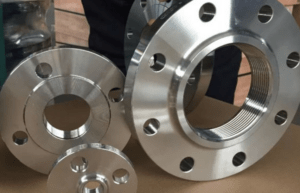
Hastelloy C22 Properties and Applications
Hastelloy C22 Properties:
Hastelloy C22 alloy has excellent resistance to pitting, crevice corrosion, and stress corrosion cracking. It has excellent oxidation resistance in water media, including wet chlorine, nitric acid, or mixed acids containing chloride ions. Additionally, Hastelloy C22 alloy has ideal resistance to both reducing and oxidizing environments encountered during processing. Relying on this versatile performance, it can be used in challenging environments or in various production plants. Hastelloy C22 alloy has exceptional resistance to various chemical environments, including strongly oxidizing substances such as ferric chloride, copper chloride, chlorine, thermally polluted solutions (organic or inorganic), formic acid, acetic acid, acetic anhydride, seawater, and salt solutions.
Hastelloy C22 alloy has the ability to resist grain boundary precipitation in the welding heat-affected zone, which allows it to adapt to many chemical process applications while in the welding state.
Metallographic Structure of Hastelloy C22:
The alloy has a face-centered cubic lattice structure.
Hastelloy C22 Corrosion Resistance:
Hastelloy C22 alloy is suitable for various chemical process industries containing oxidizing and reducing media. The high molybdenum and chromium content enables the alloy to resist the corrosion of chloride ions, and the tungsten element further improves its corrosion resistance. Hastelloy C22 is one of the few materials that can resist the corrosion of moist chlorine, hypochlorite, and chlorine dioxide solutions. The alloy exhibits significant corrosion resistance to high concentrations of chloride salt solutions such as ferric chloride and copper chloride.
Welding
The nickel-based alloy welding pool is very viscous and has a shallow penetration depth. Increasing the welding current cannot significantly improve the metal’s fluidity and increase the penetration depth.
Unlike the concave weld bead formed when welding carbon steel or stainless steel, the weld bead surface of the nickel-based alloy requires a convex shape to prevent crystal cracking. The first layer of root weld may undergo crystal cracking, which can be eliminated by using a small current and filling in more wire.
When operating manual tungsten inert gas arc welding, the filler wire should not be directly immersed into the molten pool, but should be fed in while melting at the front of the tungsten, with the filler wire tip always under argon protection. When the arc is extinguished, more wire should be added to increase the thickness of the weld.
Due to the characteristics of nickel-based alloys and limitations on welding current, the welding speed is relatively slow, requiring patience and endurance from the welder.
When manual tungsten inert gas arc welding is used to weld nickel-based alloys, whether it is for root welding, interpass welding, or surface welding, the back side of the workpiece must be protected by argon to prevent material oxidation.
Hastelloy C22 Applications:
Hastelloy C22 alloy has been widely used in the chemical and petrochemical industries, such as in components and catalytic systems that are exposed to chlorinated organic compounds. This material is particularly suitable for use in high-temperature, mixed-impurity, inorganic and organic acids (such as formic and acetic acid), and seawater corrosion environments.
- Acetic acid/acetic anhydride
- Pickling
- Glass paper manufacturing
- Chlorination systems
- Complex mixed acids
- Rollers in zinc plating baths
- Expansion bellows
- Flue gas scrubber systems
- Geothermal wells
- Hydrogen fluoride bath cleaners
- Incinerator clean-up systems
- Nuclear fuel reprocessing
- Insecticide production
- Phosphate production
- Pickling systems
- Plate heat exchangers
- Selective filtration systems
- Sulphur dioxide cooling towers
- Sulphonation systems
- Tubular heat exchangers
- Heap soldering valves
Why Choose Huaxiao Alloy?
Thank you for reading our article and we hope it can help you know Hastelloy C22 Properties and Applications better. If you want to find more information about Hastelloy C22, we’d advise you to visit Huaxiao Alloy. As a leading supplier of alloy products across the world, Huaxiao Alloy provides customers with high-quality Hastelloy C22 at a very competitive price.