
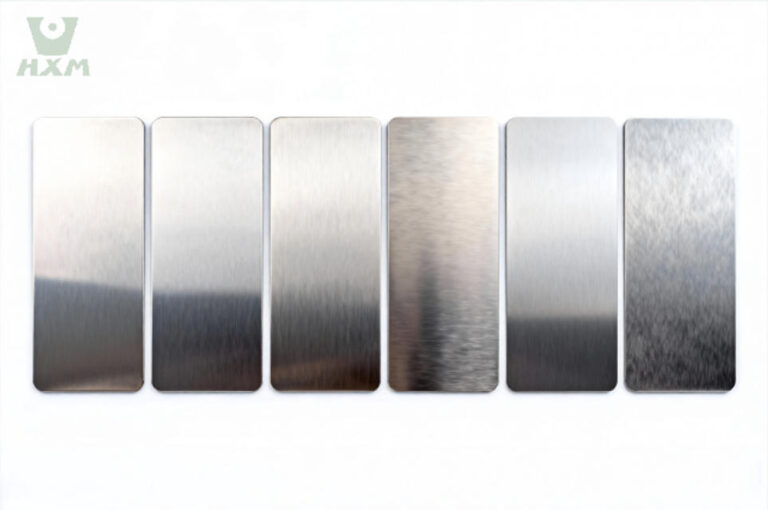
Stainless steel surface finishes are far more than a cosmetic choice. The finish of stainless steel directly affects corrosion resistance, cleanability, durability, appearance, fabrication performance, and cost. Whether you are sourcing stainless steel sheets for architectural cladding, selecting finishes for food-processing equipment, or specifying stainless steel components for power generation and chemical plants, understanding surface finishes is essential.
This guide explains every major stainless steel surface finish, how each is produced, where it is used, how it compares to other finishes, and how to choose the right finish for your application. Written from a manufacturer and exporter perspective, this article reflects real-world production, inspection, and application standards used globally.
As a professional metal supplier, Huaxiao-Alloy provides stainless steel sheets, coils, and plates with controlled surface finishes for industrial, architectural, and precision applications worldwide.
1. What Is a Stainless Steel Surface Finish?
A stainless steel surface finish refers to the final surface condition of stainless steel after rolling, annealing, pickling, polishing, brushing, or other surface treatment processes.
In practical terms, the surface finish determines:
How smooth or rough the steel feels
How reflective or matte the surface appears
How resistant the surface is to corrosion, staining, and contamination
How easily the steel can be cleaned or welded
This is why search terms such as stainless steel surface finish, finish stainless steel, surface finish of stainless steel, and stainless steel finishes are so common among buyers.
Surface finishes are usually classified by:
Production method (mill finish, polished, brushed, ground)
Standardized grade (2B, BA, No.4, No.8, etc.)
Surface roughness (Ra value)
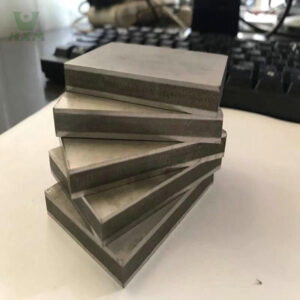
Huaxiao-Alloy supplies stainless steel clad plates (stainless steel composite plates) with cladding thickness 1.5–10 mm and total thickness up to 200 mm. Available in 304, 316L, 321, duplex stainless, and nickel alloys bonded to carbon or alloy steel. Applications: petrochemical, shipbuilding, power, construction, and chemical industries.
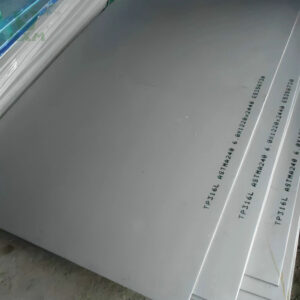
316 / 316L Stainless Steel Sheet&Plate
Huaxiao Alloy is a professional stainless steel supplier, specializing in high-quality stainless steel sheets and plates for global industries. Our TP316 / 316L stainless steel sheets and plates are manufactured to international standards, ensuring excellent corrosion resistance, durability, and reliability for demanding applications.
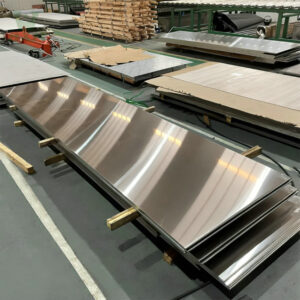
304 / 304L Stainless Steel Sheet&Plate
Huaxiao Alloy is a professional stainless steel supplier dedicated to providing high-quality materials for global industries. Our 304 / 304L stainless steel sheets and plates are manufactured to meet international standards, ensuring superior performance in various applications.
2. Why Stainless Steel Surface Finishes Matter in Real Applications
Choosing the wrong stainless steel finish can lead to:
Premature corrosion
Hygiene issues
Poor appearance after installation
Increased maintenance costs
2.1 Corrosion Resistance
Smoother finishes generally provide better corrosion resistance because:
Fewer surface defects trap contaminants
The passive chromium oxide layer forms more uniformly
2.2 Cleanability and Hygiene
Industries such as:
Food processing
Medical equipment
Pharmaceuticals
require finishes that minimize bacterial adhesion. This explains the popularity of 2B, BA, and fine polished finishes.
2.3 Appearance and Aesthetics
Architectural and decorative applications often prioritize:
Uniform texture
Controlled reflectivity
Scratch concealment
This drives demand for No.4, satin, and brushed stainless steel finishes.
3. How Stainless Steel Surface Finishes Are Produced
Understanding how finishes are made helps buyers evaluate quality and consistency.
3.1 Cold Rolling and Surface Formation
Most precision stainless steel finishes begin with cold rolled stainless steel, which already offers:
Smooth base surface
Tight thickness tolerance
3.2 Pickling and Annealing
Pickling removes scale and oxides. Annealing restores ductility and stabilizes the surface structure.
3.3 Mechanical Finishing
Mechanical processes include:
Brushing
Grinding
Polishing
Buffing
Each process alters surface roughness and appearance.
4. Mill Finishes for Stainless Steel (2D, 2B, BA)
Mill finishes are produced directly at the steel mill without decorative polishing.
4.1 2D Finish Stainless Steel
Dull, matte appearance
Slightly rougher than 2B
Typically used for industrial components
Common in:
Chemical tanks
Structural applications
4.2 2B Finish Stainless Steel (Most Common)
2B finish stainless steel is the most widely used stainless steel surface finish globally.
Characteristics:
Smooth, slightly reflective
Uniform appearance
Ra typically 0.1–0.5 μm
How it’s made:
Cold rolling → annealing → pickling → light skin pass rolling
Typical applications:
Stainless steel sheets
Kitchen equipment
Chemical equipment
General fabrication
Search queries such as 2B finish on stainless steel, stainless steel 2b finish, and 2b vs #4 finish reflect how critical this finish is for buyers.
4.3 Bright Annealed (BA) Finish
Highly reflective
Mirror-like without polishing
Produced in oxygen-free annealing atmosphere
Common uses:
Decorative panels
Appliances
Reflective components
5. Polished and Brushed Stainless Steel Finishes
These finishes are created through mechanical abrasion.
5.1 No.4 Finish Stainless Steel (Brushed Finish)
The No.4 stainless steel finish is one of the most popular architectural finishes.
Features:
Directional grain
Satin appearance
Good balance between appearance and durability
Typical Ra: 0.4–0.8 μm
Applications:
Elevators
Wall panels
Kitchen equipment
Stainless steel sheet finishes
5.2 Satin and Matte Stainless Steel Finishes
Often confused with No.4, satin and matte finishes:
Have softer reflectivity
Hide fingerprints better
Are widely used in decorative and public environments
5.3 Linen, Jitterbug, and Textured Finishes
Textured finishes such as:
Linen finish stainless steel
Jitterbug finish
offer:
Scratch concealment
Unique visual appeal
Used mainly in:
Architecture
Interior design
6. Mirror and High-Polish Finishes (#8 Finish)
6.1 No.8 Mirror Finish Stainless Steel
Highly reflective
Ra typically ≤0.05 μm
Produced through multiple polishing stages
Applications:
Decorative elements
Signage
Luxury interiors
7. Stainless Steel Finish Grades and Charts
Finish charts help buyers compare options.
7.1 Stainless Steel Finish Chart (Simplified)
| Finish | Appearance | Typical Use |
|---|---|---|
| 2D | Dull | Industrial |
| 2B | Smooth | General purpose |
| BA | Bright | Decorative |
| No.4 | Brushed | Architecture |
| No.8 | Mirror | Decorative |
This aligns with common searches like stainless steel finish chart, metal finishing chart, and surface finishes chart.
8. Surface Roughness (Ra) and Why It Matters
Ra (roughness average) quantifies surface smoothness.
8.1 Typical Ra Values
2B finish: 0.1–0.5 μm
No.4 finish: 0.4–0.8 μm
Mirror finish: ≤0.05 μm
Lower Ra = smoother surface = easier cleaning and better corrosion resistance.
9. Stainless Steel Surface Finish Treatment Beyond Finishing
Surface finishing is often combined with:
Passivation
Electropolishing
Surface grinding
These processes further improve corrosion resistance and cleanliness.
10. Choosing the Right Stainless Steel Surface Finishes
Key decision factors:
Environment (corrosive, hygienic, outdoor)
Aesthetic requirements
Fabrication method
Maintenance expectations
Budget
There is no “best” finish—only the right finish for the application.
11. Common Stainless Steel Surface Finishes Mistakes Buyers Make
Choosing mirror finish where satin is more practical
Ignoring Ra requirements for hygienic applications
Not specifying grain direction for brushed finishes
Assuming all No.4 finishes look the same
12. Stainless Steel Finishes Supplied by Huaxiao-Alloy
Huaxiao-Alloy supplies stainless steel sheets, coils, and plates with controlled surface finishes including:
2B finish stainless steel
BA finish
No.4 brushed finish
Satin and matte finishes
Custom polished finishes
We serve customers in:
Architecture & construction
Food & beverage
Energy & power generation
Chemical processing
Manufacturing
📧 Email: [email protected]
📱 WhatsApp: +1 (579) 300-2733
Our team provides technical guidance, surface samples, and export-ready solutions tailored to your application.
The most common finish is 2B stainless steel, widely used for general industrial and commercial applications.
2B is smoother and more reflective, while No.4 has a brushed, directional grain and a satin appearance.
Mirror finishes can improve corrosion resistance but are more expensive and show scratches easily.
2B, BA, or electropolished finishes are commonly used due to smoothness and hygiene.
Yes. Finishes can be adjusted by polishing grade, grain size, and Ra value.
Yes. Rough finishes may require cleaning before welding to ensure quality joints.
Satin, matte, and textured finishes hide fingerprints better than mirror finishes.
Recent Blog
If you found this article good, feel free to share it on your other social media platforms.