
1. Introduction: Understanding Aluminum Gauge Thickness and Its Importance
In the aluminum industry, knowing the gauge thickness of aluminum sheets is crucial. Whether you’re working in construction, manufacturing, automotive, or aerospace, precise gauge measurements ensure structural integrity, weight optimization, and cost efficiency.
At Huaxiao-Alloy, we provide high-quality aluminum sheets and coils with guaranteed thickness accuracy — meeting both ASTM and EN standards. This guide will walk you through the complete aluminum gauge thickness chart, conversion methods, and selection advice for your specific application.
2. What Is Aluminum Gauge?
The “gauge” refers to a standardized measurement that indicates the thickness of metal sheets. For aluminum, the higher the gauge number, the thinner the sheet.
Unlike steel, aluminum uses a non-linear gauge scale, meaning that the same gauge number doesn’t represent the same thickness in inches or millimeters as it does in other metals.
For instance:
10 gauge aluminum = 0.1019 inches (2.588 mm)
20 gauge aluminum = 0.032 inches (0.813 mm)
Understanding this conversion is critical when choosing materials for fabrication, forming, or finishing.

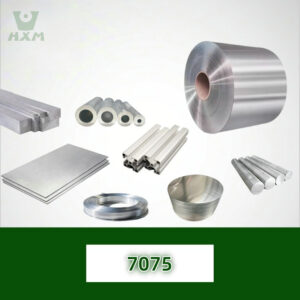
Huaxiao-Alloy is a globally recognized supplier and manufacturer of 7075 aluminum alloy, the gold standard for ultra-high-strength applications. Renowned for its zinc-magnesium-copper composition, 7075 alloy is engineered for aerospace, military, and high-performance engineering industries. We provide all standard tempers (T6, T651, T7351) in plates, sheets, bars, rods, and custom profiles.
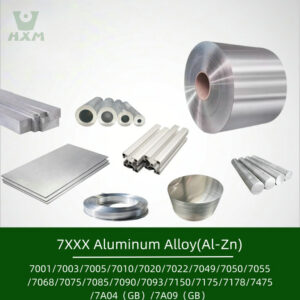
Huaxiao-Alloy is a global authority in 7000 series aluminum alloys, supplying premium grades such as 7075, 7050, 7046, 7010, 7049, and others. Renowned for their zinc-magnesium-copper compositions, our alloys deliver unmatched strength-to-weight ratios, fatigue resistance, and toughness for aerospace, defense, and high-performance engineering applications.
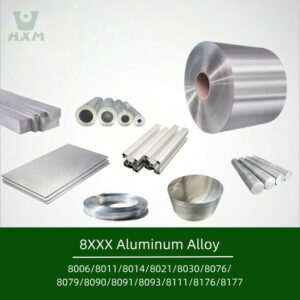
Huaxiao-Alloy is a global leader in 8000 series aluminum alloys, providing a comprehensive range of grades, including 8011, 8021, 8079, 8006, 8111, and others. Designed for niche applications requiring exceptional formability, thermal conductivity, and corrosion resistance, our alloys are widely used in packaging, electronics, and automotive industries.
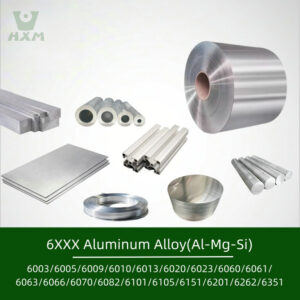
Huaxiao-Alloy is a globally trusted supplier and manufacturer of 6000 series aluminum alloys, including 6061, 6063, 6082, 6005, 6101, and other grades. Renowned for their magnesium-silicon composition, our alloys deliver exceptional strength, weldability, and corrosion resistance, making them ideal for structural, automotive, and architectural applications.

Huaxiao-Alloy is a globally recognized supplier and manufacturer of 5000 series aluminum alloys, including 5052, 5083, 5086, 5454, 5754, and other specialized grades. Renowned for their magnesium-enhanced strength and exceptional resistance to harsh environments, our alloys are engineered for marine, automotive, and structural applications.

3. Aluminum Gauge Thickness Conversion Table
Below is a comprehensive aluminum gauge to inch and mm conversion chart based on standard U.S. measurements.
| Gauge (GA) | Inches | Millimeters (mm) |
|---|---|---|
| 0000 (4/0) | 0.4600 | 11.684 |
| 000 (3/0) | 0.4096 | 10.403 |
| 00 (2/0) | 0.3648 | 9.266 |
| 0 (1/0) | 0.3249 | 8.255 |
| 1 | 0.2893 | 7.349 |
| 2 | 0.2576 | 6.543 |
| 3 | 0.2294 | 5.827 |
| 4 | 0.2043 | 5.189 |
| 5 | 0.1819 | 4.620 |
| 6 | 0.1620 | 4.115 |
| 7 | 0.1443 | 3.665 |
| 8 | 0.1285 | 3.264 |
| 9 | 0.1144 | 2.906 |
| 10 | 0.1019 | 2.588 |
| 11 | 0.0907 | 2.304 |
| 12 | 0.0808 | 2.052 |
| 13 | 0.0720 | 1.829 |
| 14 | 0.0641 | 1.628 |
| 15 | 0.0571 | 1.450 |
| 16 | 0.0508 | 1.290 |
| 17 | 0.0450 | 1.143 |
| 18 | 0.0403 | 1.024 |
| 19 | 0.0359 | 0.911 |
| 20 | 0.0320 | 0.813 |
| 21 | 0.0285 | 0.724 |
| 22 | 0.0253 | 0.643 |
| 23 | 0.0226 | 0.574 |
| 24 | 0.0201 | 0.511 |
| 25 | 0.0179 | 0.455 |
| 26 | 0.0159 | 0.404 |
| 27 | 0.0142 | 0.361 |
| 28 | 0.0126 | 0.320 |
| 29 | 0.0113 | 0.287 |
| 30 | 0.0100 | 0.254 |
4. How to Convert Aluminum Gauge to Inches or Millimeters
To convert aluminum gauge to inches or millimeters, use a gauge conversion formula or rely on the above chart.
However, since aluminum gauge charts are not linear, direct mathematical conversion isn’t reliable. Instead, reference industry-standard charts (like this one) or digital gauge calculators used in fabrication workshops.
Typical range (varies by grade):
Carbon (C): 0.05–0.25%
Manganese (Mn): 0.25–0.90%
Silicon (Si): 0.10–0.40%
Phosphorus (P): ≤0.04%
Sulfur (S): ≤0.05%
Iron (Fe): Balance
5. Factors Affecting Aluminum Thickness Selection
When choosing the right aluminum thickness, consider:
Application Type — Sheet gauge for roofing differs from aerospace-grade sheet thickness.
Strength vs. Weight — Thicker gauges add rigidity but increase weight.
Formability — Thinner gauges are easier to bend and form.
Corrosion Resistance — Coated or anodized thinner sheets often outperform thicker, untreated ones.
Welding and Cutting Methods — Some gauges perform better with laser or plasma cutting.
6. Typical Applications by Aluminum Gauge
| Gauge Range | Approx. Thickness (mm) | Common Applications |
|---|---|---|
| 8–12 | 2.0–3.2 mm | Structural parts, heavy-duty panels |
| 13–16 | 1.3–2.0 mm | Automotive panels, building cladding |
| 17–20 | 0.8–1.2 mm | HVAC, lighting, signage |
| 21–24 | 0.5–0.7 mm | Roofing, kitchen equipment |
| 25–30 | 0.25–0.45 mm | Electronics, packaging, reflective materials |
7. Huaxiao-Alloy Aluminum Product Range
At Huaxiao-Alloy, we offer an extensive inventory of aluminum products in all standard gauges and custom thicknesses, including:
Aluminum Sheet (1000–7000 Series)
Aluminum Coil
Aluminum Plate
Checkered Aluminum Sheet
Color-Coated Aluminum Sheet
Each product undergoes strict thickness testing, surface inspection, and flatness control to ensure top performance across industries.
8. Why Choose Huaxiao-Alloy as Your Aluminum Supplier
Precision Manufacturing: ±0.01 mm thickness tolerance.
Wide Alloy Range: 1050, 1060, 3003, 5052, 6061, 7075, etc.
Custom Cutting & Processing: Coil slitting, shearing, polishing.
Global Export Experience: Trusted by clients in 60+ countries.
Fast Delivery & Competitive Price: Direct factory supply from Wuxi, Foshan, and Shanghai.
9. How to Read and Use the Aluminum Gauge Chart
When you reference the chart:
Always confirm metal type (steel and aluminum differ).
Use inches or mm, not both, to avoid rounding errors.
For design drawings, specify both gauge and actual thickness.
For example:
“Aluminum Sheet 14 Gauge (0.0641 inch / 1.63 mm)”
This prevents misinterpretation in international procurement or fabrication.
No. Aluminum gauge numbers correspond to different thicknesses than steel gauge. Always use an aluminum-specific chart.
Typically, 0 gauge (8.255 mm) is the thickest standard sheet before it’s classified as a plate.
Approximately 19 gauge equals 0.911 mm.
Use a micrometer or digital caliper for precision. Always measure at multiple points to ensure uniform thickness.
Most roofing sheets use 22–26 gauge (0.4–0.6 mm), balancing strength and flexibility.
Recent Blog
If you found this article good, feel free to share it on your other social media platforms.